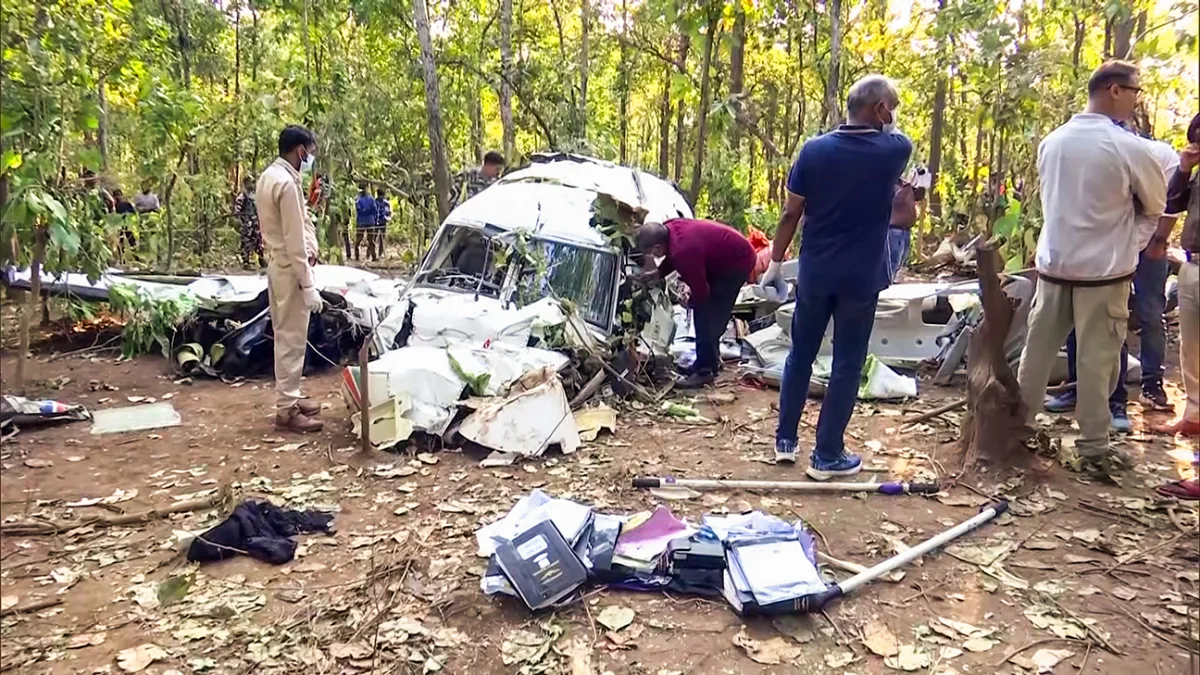
The Directorate General of Civil Aviation (DGCA) on Tuesday came out with stringent safety measures for non-scheduled flight operators (NSOPs). The measures were announced a day after a private flight, an air ambulance operated by an NSOP, crashed in Jharkhand, killing all seven people on board.
The DGCA today held a meeting with all NSOPs and announced the safety measures. The aviation watchdog stated that pilots cannot alone be blamed for safety lapses.
Advertisement
The regulator said it held the meeting to address a recent surge in aviation incidents. It told such flight operators during the meeting that there was a critical need to increase focus on safety across the sector.
‘Pilots alone cannot be blamed’
“Safety must remain the absolute priority, superseding all commercial considerations, charter commitments or VIP movements,” the DGCA said in a statement.
“The authority asserted that an organisation’s leadership must prioritise safety above all other criteria. To support this, the authority reaffirmed that the Pilot-in-Command’s decision to divert, delay, or cancel a flight for safety reasons is final and must be respected by operators without commercial consequences,” the statement added.
Asserting that “safety lapses cannot simply be blamed on pilots”, the DGCA said accountable managers and senior leadership of NSOPs would be to blame if any systemic non-compliances are found.
Intensive safety audits
While the regulator is taking many steps, the key among them is intensive audits of NSOPs. Random Cockpit Voice Recorder (CVR) audits, cross verification of ADS-B data, fuel records, and technical logs to detect unauthorised operations or the “falsifying” of data would be carried out as part of these measures.
The operators would be required to publicly disclose critical safety information, including aircraft age and maintenance history.
The DGCA would also undertake a safety ranking of the NSOPs.
Further, pilots flying NSOPs’ planes would attract stricter penalties for non-compliance and their licenses could be suspended for up to five years in such cases.
The focus will also remain on the monitoring of NSOPs’ older aircraft, as well as those whose ownership changes.
“The regulator will audit NSOPs that run their own Maintenance, Repair and Overhaul (MRO) facilities; those found lacking adequacy will be required to outsource maintenance to approved organisations,” the statement said.
The operators will now also be required to set up real-time weather update systems and ensure strict compliance with Standard Operating Practices (SOPs).
The first phase of the special safety audit of NSOPs is likely to be completed by early March, and the second phase will start soon after to cover the remaining NSOPs.
The DGCA will also convene a physical workshop on safety following the completion of current intensive audits to ensure all stakeholders are aligned with these new operational mandates.
Ajit Pawar plane crash: VSR’s 4 planes grounded
Monday’s crash was the second in less than a month that involved the flight of a non-scheduled operator. On January 28, a chartered plane crashed in Maharashtra’s Baramati, killing the state’s Deputy Chief Minister Ajit Pawar and four others. The flight was operated by VSR Ventures Pvt Ltd.
The DGCA today also announced that it was grounding four aircraft operated by VSR Ventures as it had discovered multiple violations in a special safety audit. “Learjet 40/45 aircraft with registration VT-VRA, VT-VRS, VT-VRV and VT-TRI have been immediately grounded till continued airworthiness standards are restored,” the officer said.